










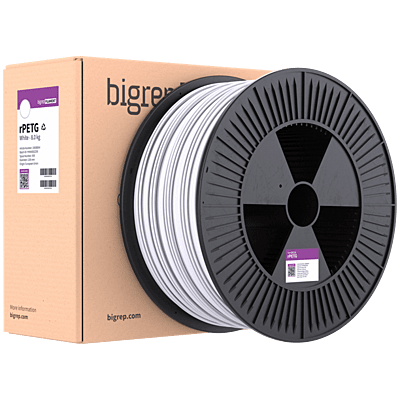
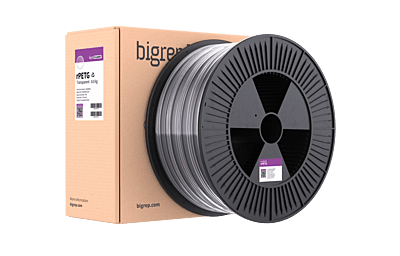
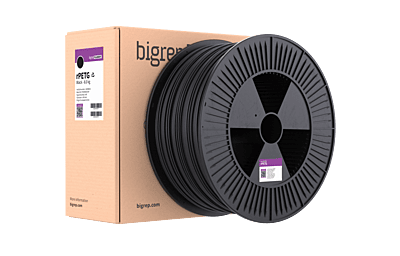

BigRep rPETG
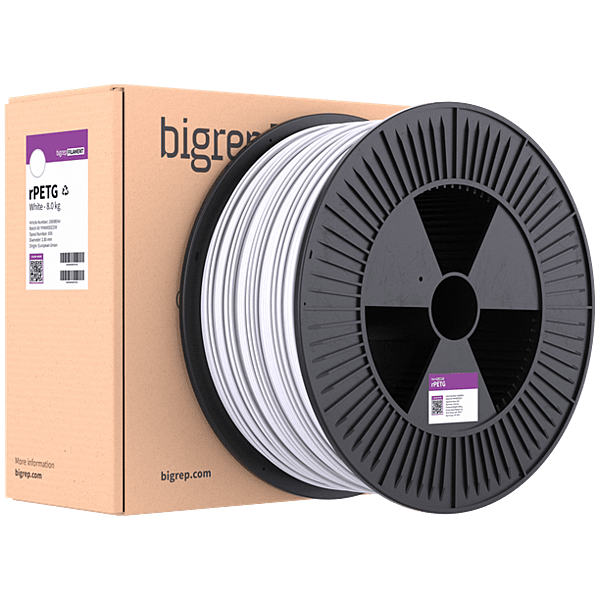
Easy to print and perfect for design iterations, BigRep rPETG is a recycled filament with well-balanced mechanical properties and chemical resistance.
Volume Pricing Available
rPETG Recycled PETG Filament
rPETG is a high-performance recycled PETG filament that combines strength, durability, and chemical resistance with a more sustainable manufacturing approach. Produced using recycled PETG materials, rPETG helps reduce waste while delivering the dependable performance required for demanding 3D printing applications.
Known for its excellent balance of mechanical properties, rPETG offers greater impact resistance and chemical resistance than standard PLA-based materials while remaining easy to print on most FDM/FFF 3D printers. Its strong layer adhesion and attractive surface finish make it ideal for both functional and visual parts.
rPETG is particularly well-suited for applications requiring durability and exposure to chemicals, oils, fuels, alcohols, or outdoor environments. With good UV resistance and excellent toughness, it is a versatile material for engineering prototypes, manufacturing aids, enclosures, fixtures, and end-use components.
Key Benefits
• Made from recycled PETG material
• Excellent chemical resistance
• Strong and impact resistant
• Easy to print with reliable results
• Good UV resistance for indoor and outdoor use
• Attractive glossy surface finish
• Ideal for functional and engineering applications
Typical Applications
• Functional prototypes
• Manufacturing fixtures and tooling
• Enclosures and housings
• Automotive components
• Industrial parts
• Outdoor applications
• General-purpose engineering prints
rPETG delivers the strength, toughness, and chemical resistance expected from PETG while helping reduce environmental impact through the use of recycled materials.
Specifications
Material: Recycled Polyethylene Terephthalate Glycol (rPETG)
Physical Properties
• Diameter: 2.85 mm
• Density: 1.23 g/cm³
Mechanical Properties
• Tensile Strength: 54 MPa
• Tensile Modulus: 1800 MPa
• Flexural Strength: 68 MPa
• Flexural Modulus: 2000 MPa
• Notched Impact Strength: 10 kJ/m²
Thermal Properties
• Heat Deflection Temperature (1.8 MPa): 63°C
• Heat Deflection Temperature (0.45 MPa): 70°C
• Vicat Softening Temperature: 78°C
• Glass Transition Temperature (Tg): 85°C
Recommended Print Settings
• Nozzle Temperature: 220–250°C
• Build Plate Temperature: 70–90°C
• Cooling Fan: 0–50%
Additional Information
• Drying Recommendation: 60°C for 4–6 hours
• REACH Compliant: Yes
• RoHS Compliant: Yes
• FDA Compliant: No