



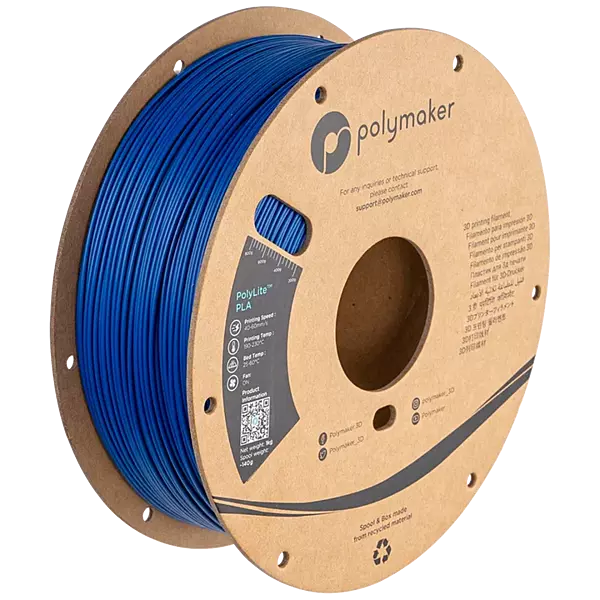
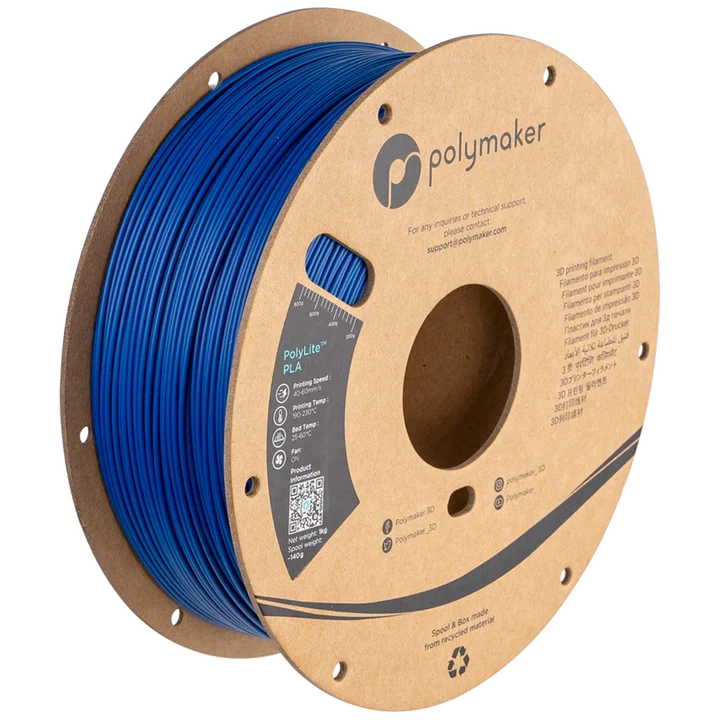
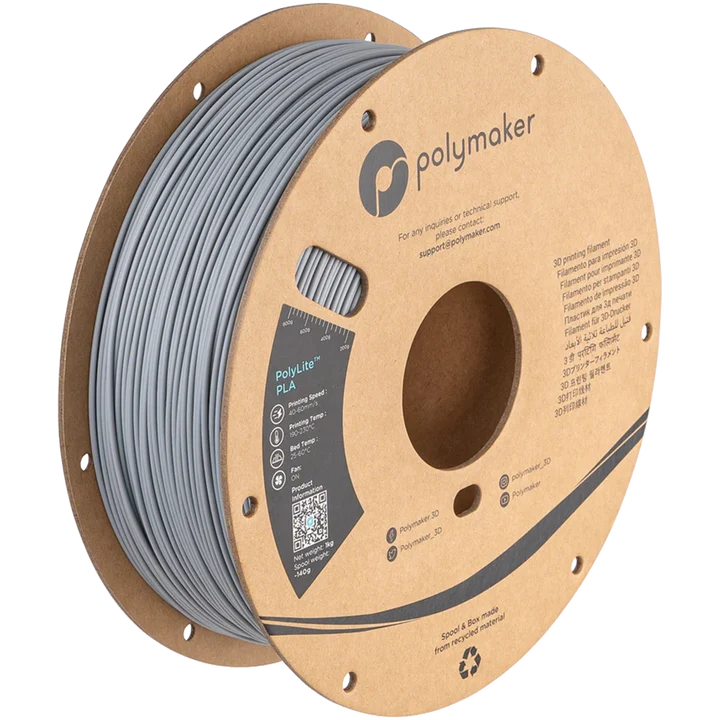
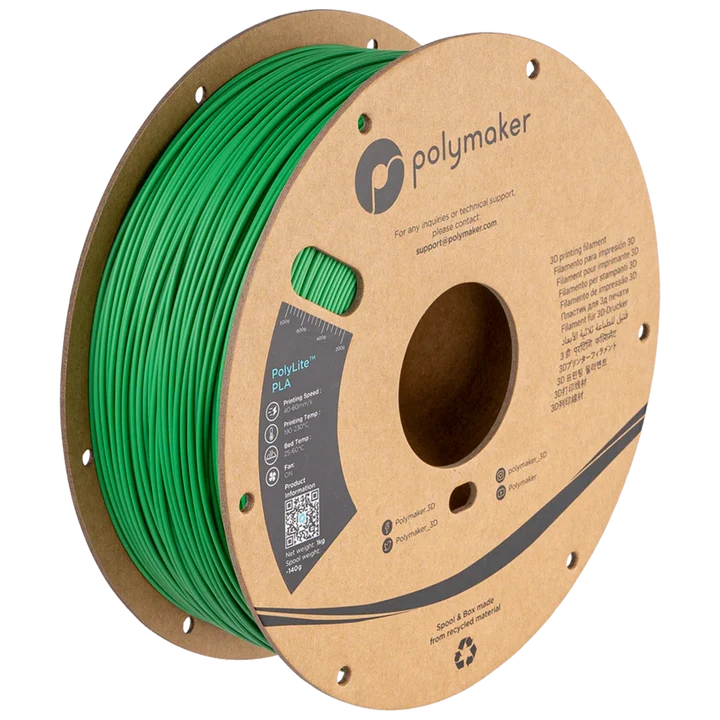
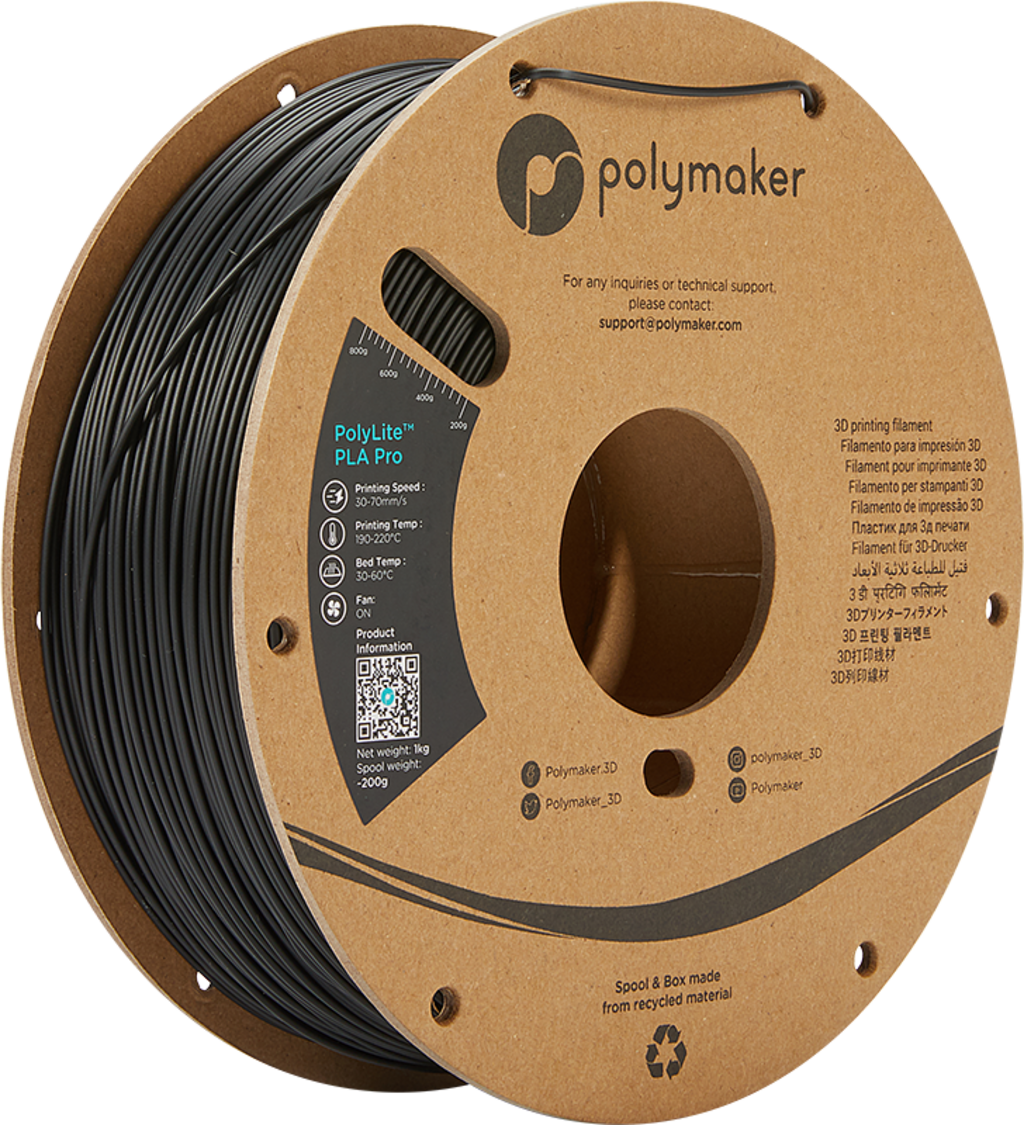
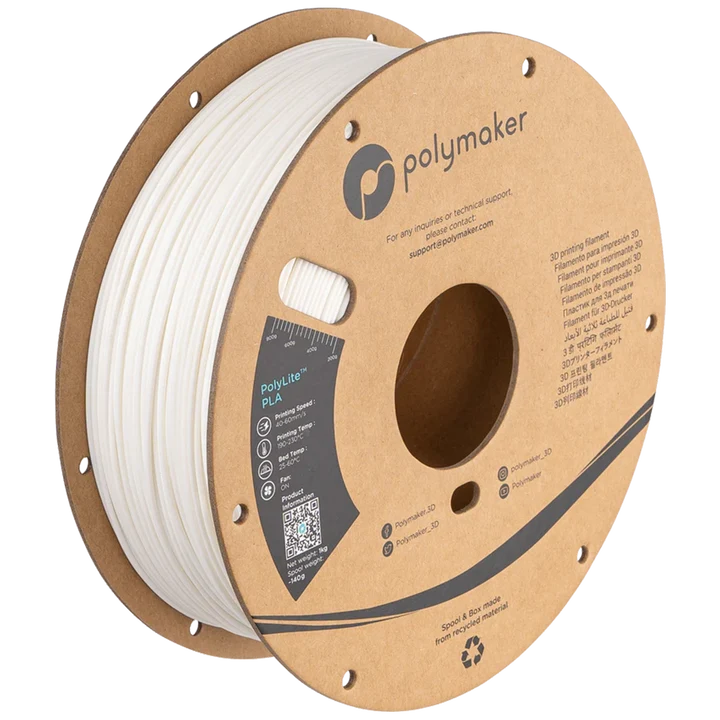
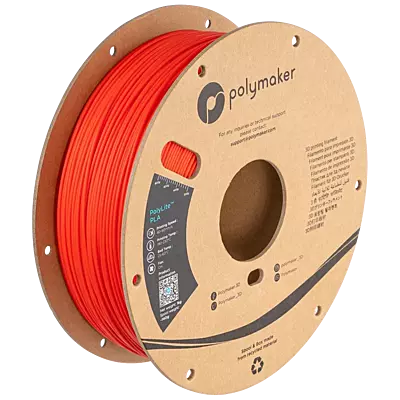
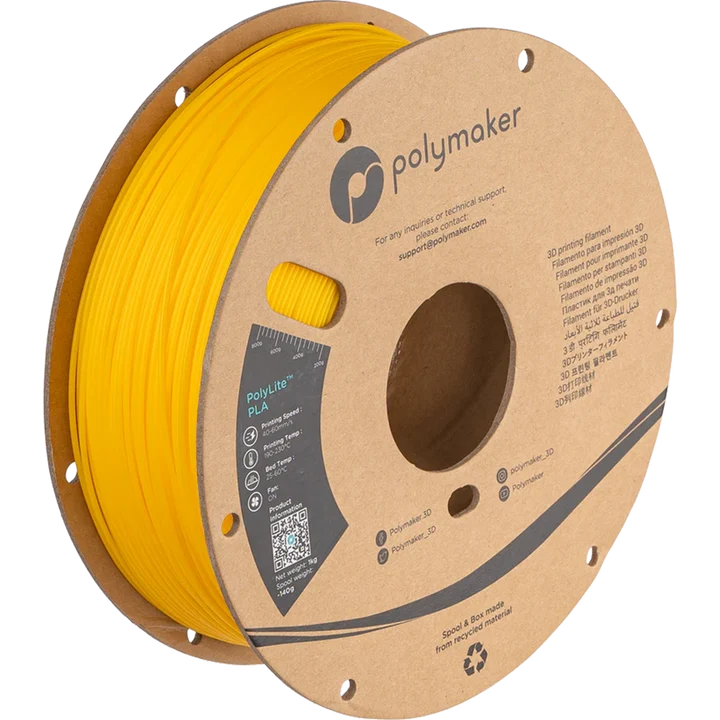
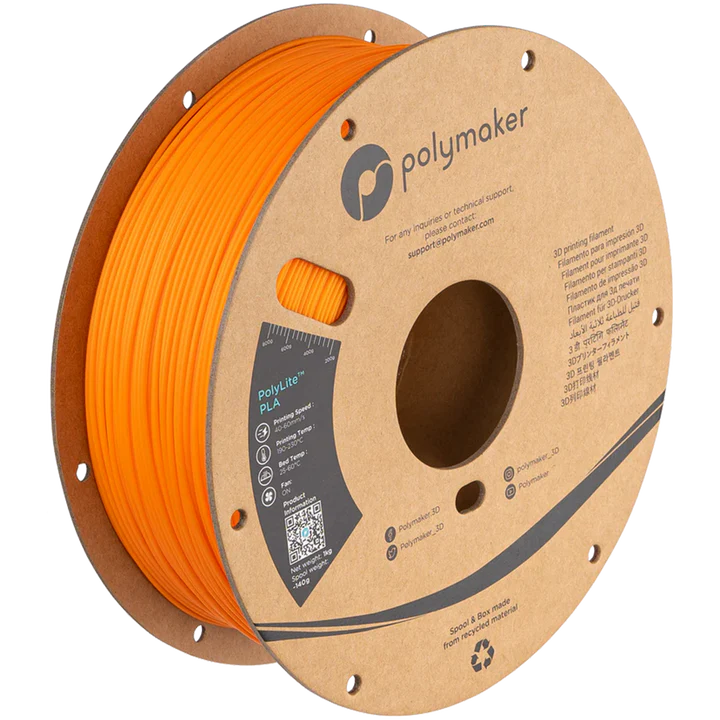
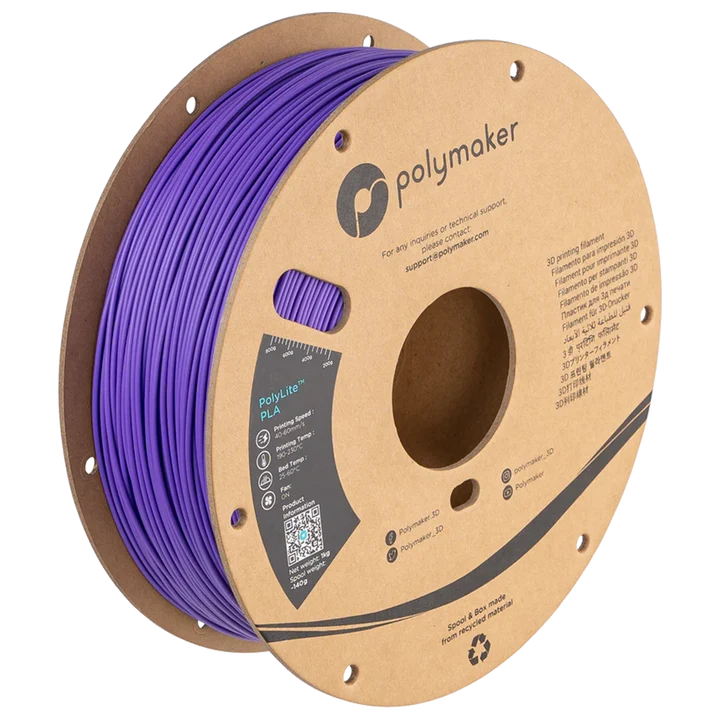
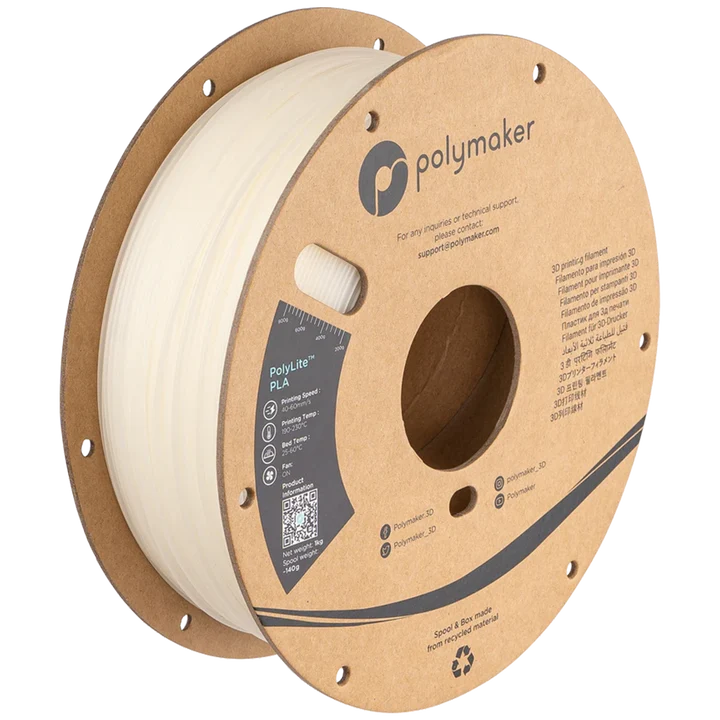
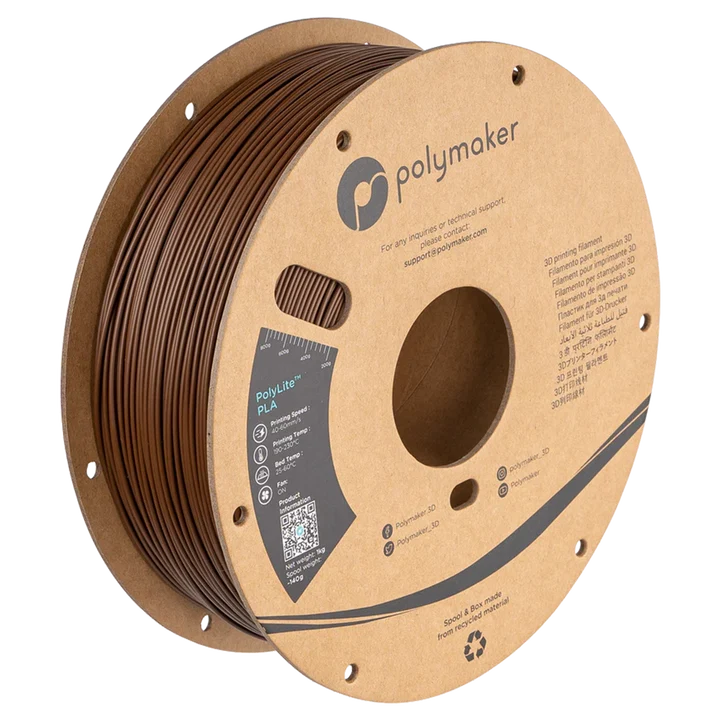
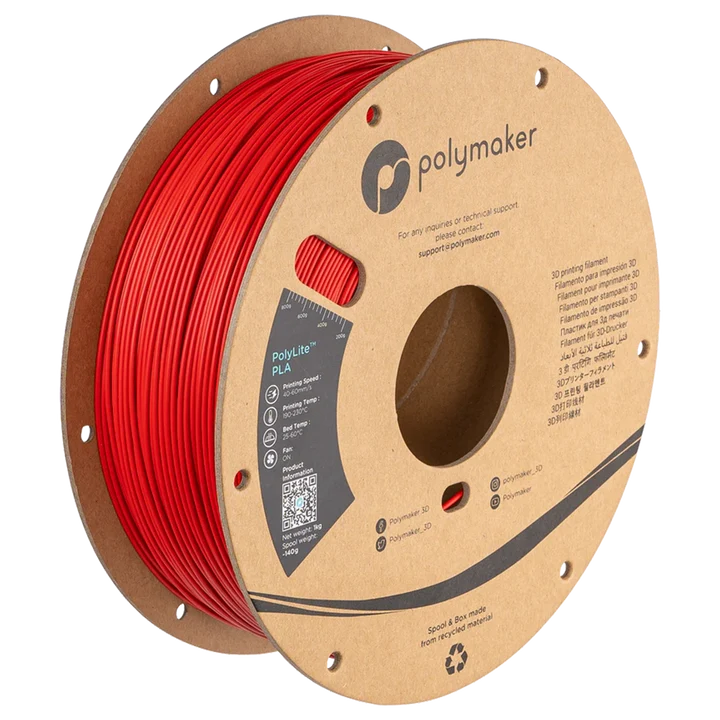
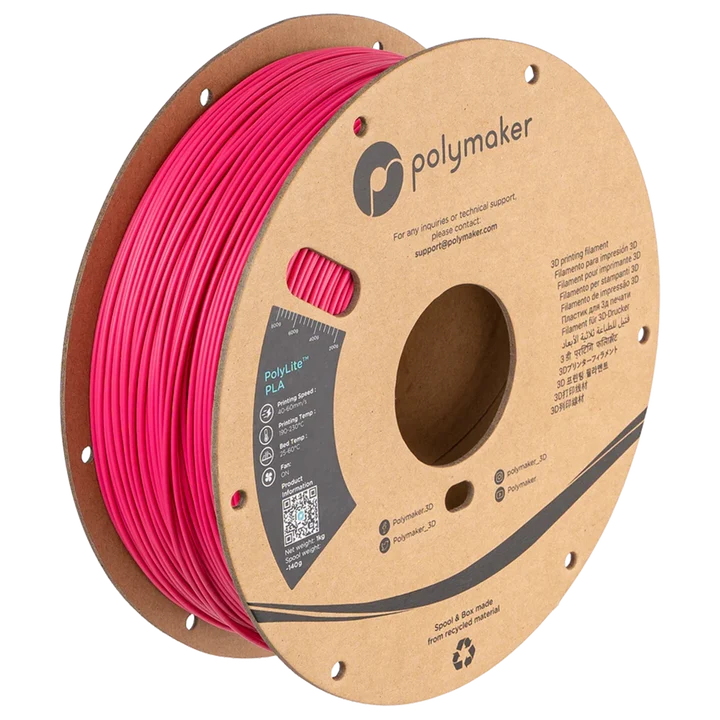
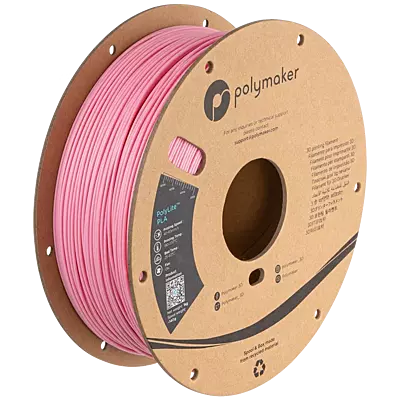
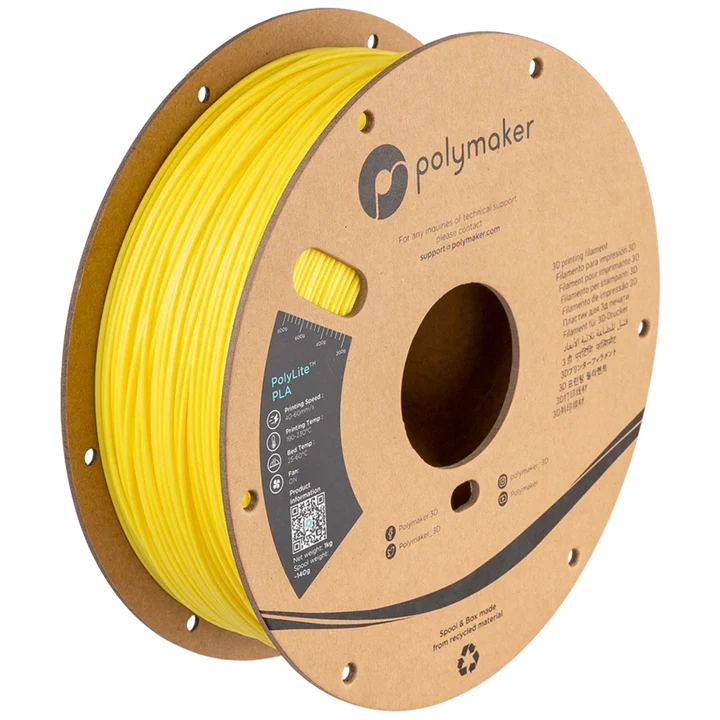
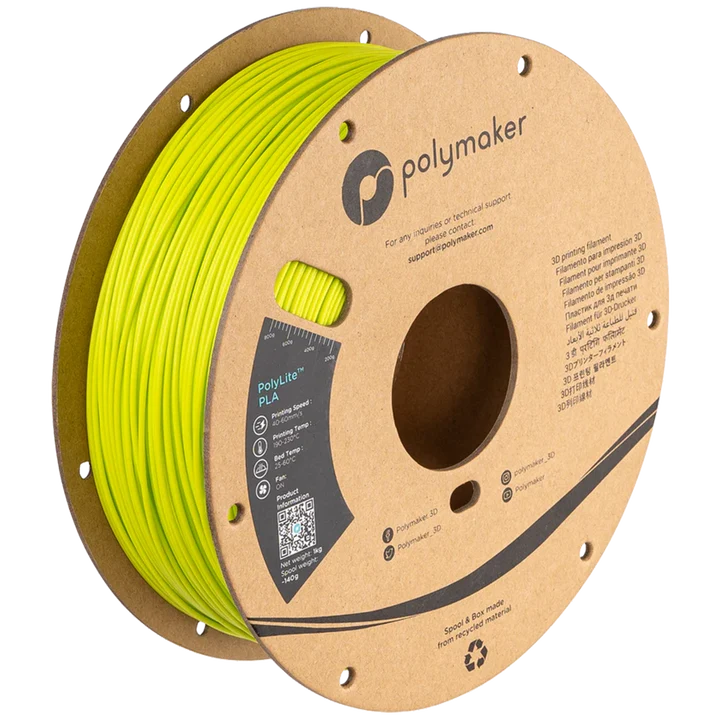
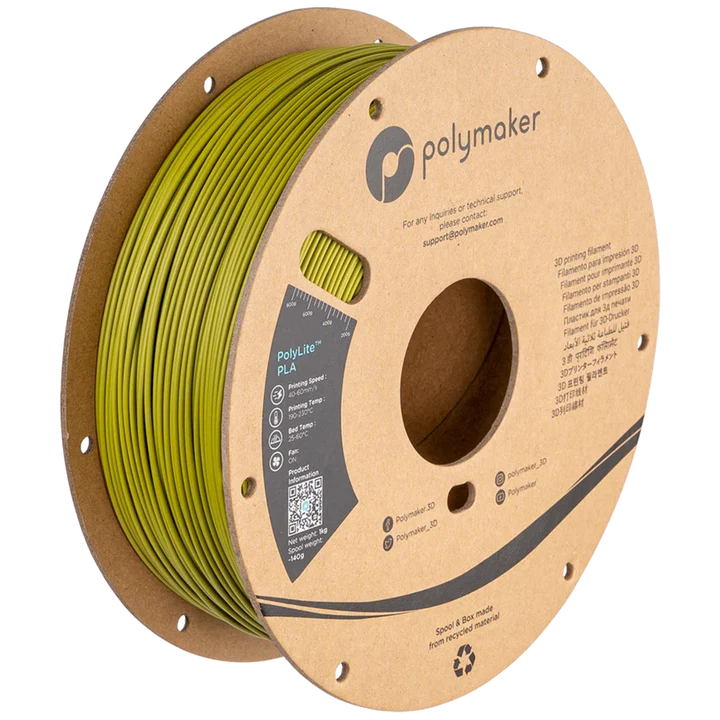
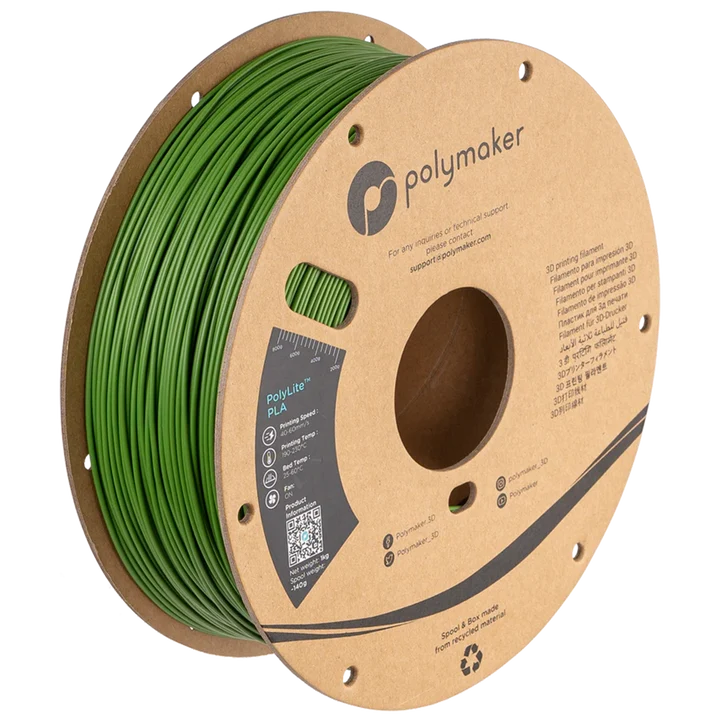
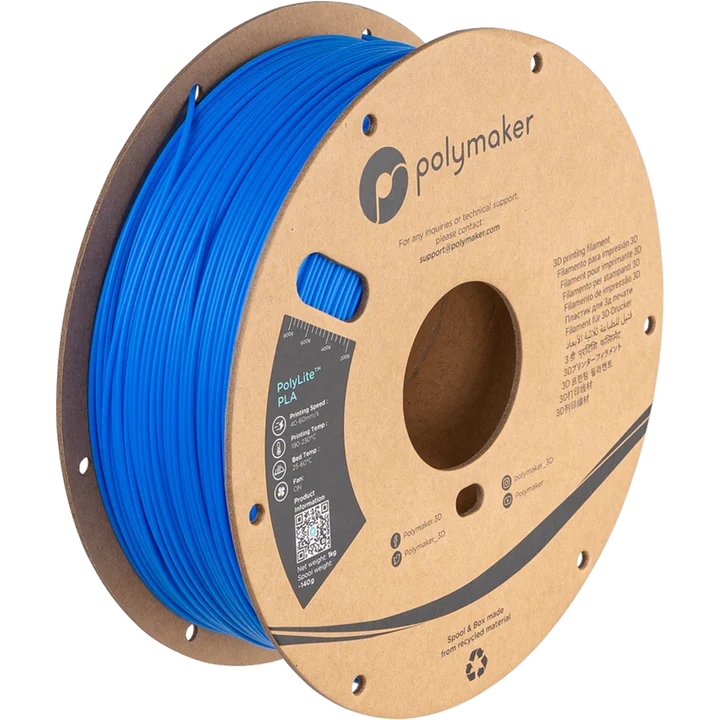
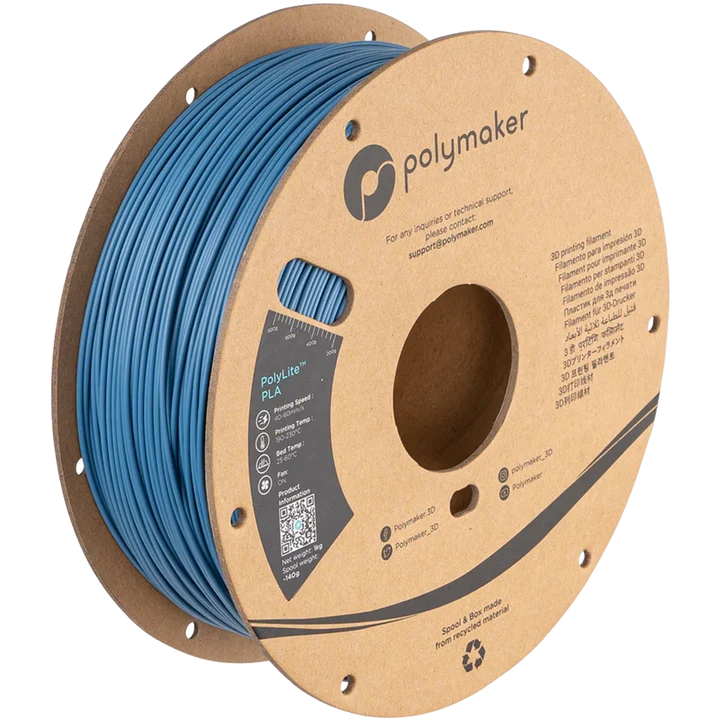
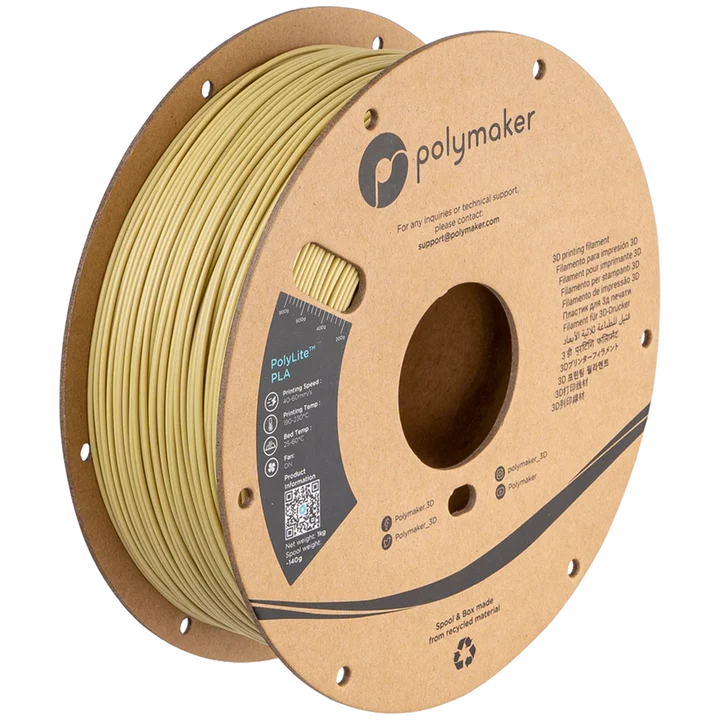
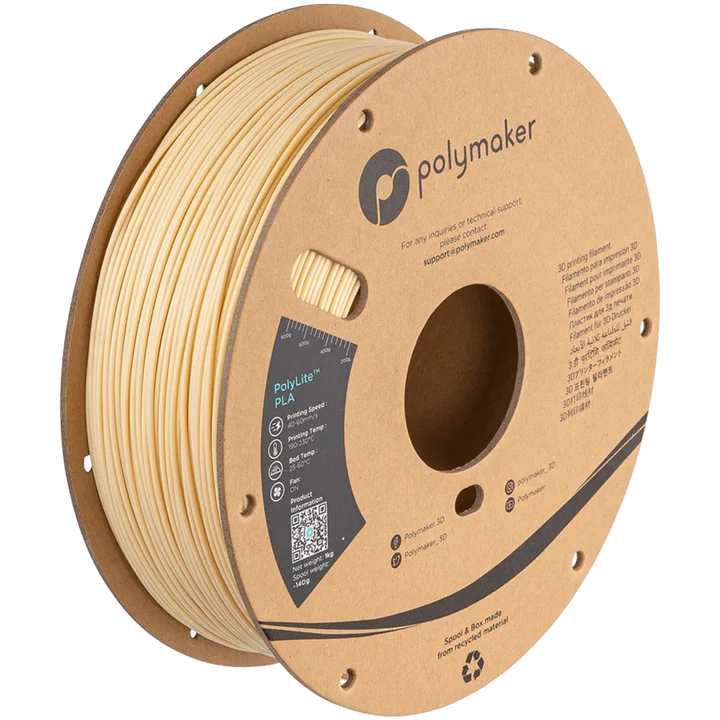
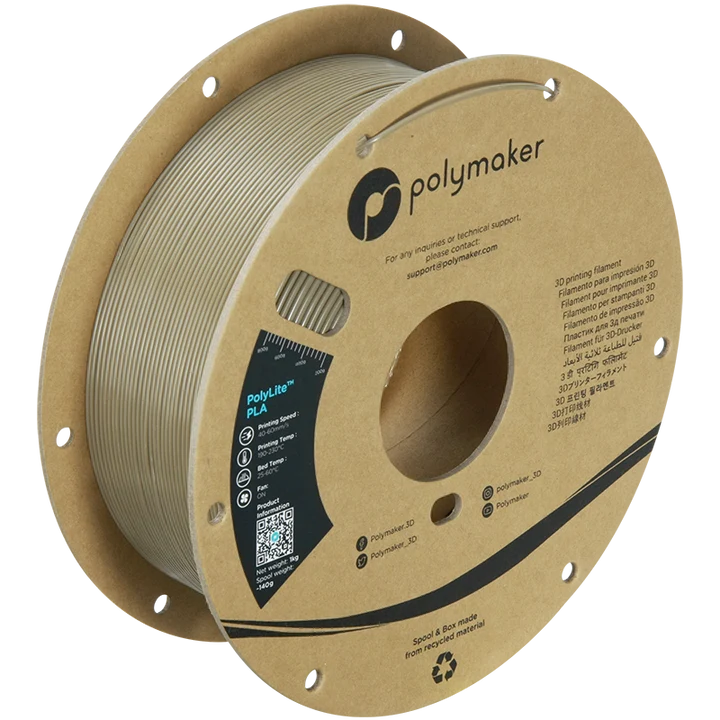
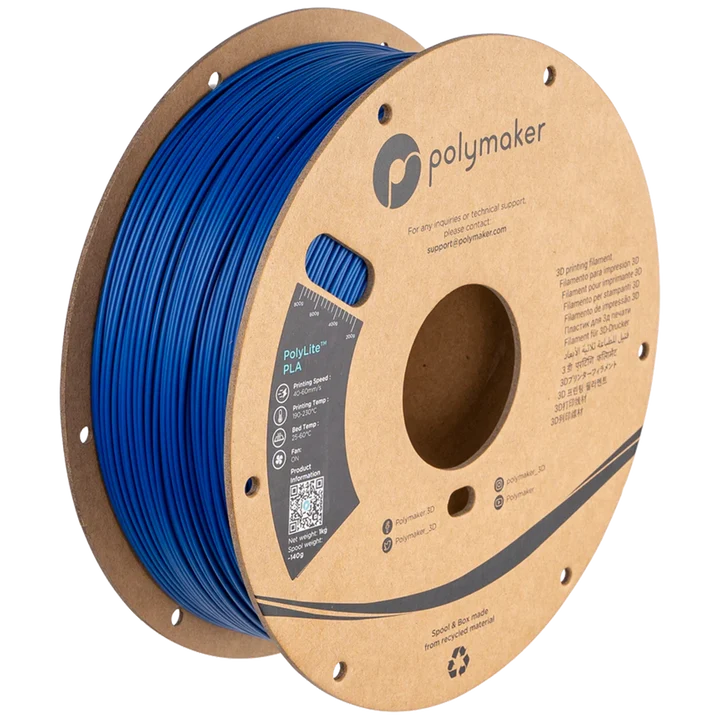
PolyLite™ PLA
PolyLite™ PLA is a high-quality, easy-to-print PLA filament designed for reliable, consistent results across a wide range of FDM/FFF applications.
Made in the USA
Volume Pricing Available
Polymaker PolyLite™ PLA Filament
PolyLite™ PLA is a high-quality PLA filament designed for reliability and ease of printing. It offers consistent print quality, excellent dimensional stability, and straightforward processing, making it a dependable material for everyday prototyping, modeling, and general-purpose FDM/FFF applications.
With a wide recommended printing range and compatibility with common build surfaces, PolyLite™ PLA is well suited for users who need predictable results without the complexity associated with more advanced engineering materials.
Key Benefits
• Excellent printability and ease of use
• Reliable and consistent print quality
• Good dimensional stability
• High stiffness and tensile strength
• Wide printing speed range
• Suitable for a broad range of FDM/FFF printers
• Compatible with PC and textured PEI build surfaces
• No heated chamber required
• Compatible with PolySupport™ and PolyDissolve™ S1 support materials
Typical Applications
• Functional prototypes
• Concept models
• Product development
• Engineering models
• Educational models
• Manufacturing aids
• Fixtures and jigs
• General-purpose 3D printed components
• Low-volume prototypes
PolyLite™ PLA provides an excellent balance of printability, mechanical performance, and reliability, making it a practical choice for everyday professional and industrial 3D printing applications.
Specifications
Material: PLA
Diameter: 1.75 mm
Density: 1.17 g/cm³ at 23°C
Melt Index: 7–11 g/10 min at 210°C / 2.16 kg
Mechanical Properties
• Young's Modulus (X-Y): 3426.9 ± 64.8 MPa
• Young's Modulus (Z): 3064.9 ± 83.4 MPa
• Tensile Strength (X-Y): 52.3 ± 0.3 MPa
• Tensile Strength (Z): 40.5 ± 0.5 MPa
• Elongation at Break (X-Y): 6.3 ± 0.6%
• Elongation at Break (Z): 1.8 ± 0.1%
• Bending Modulus (X-Y): 3230.9 ± 55.3 MPa
• Bending Strength (X-Y): 86.9 ± 1.2 MPa
• Notched Charpy Impact Strength (X-Y): 3.3 ± 0.2 kJ/m²
Thermal Properties
• Heat Deflection Temperature (1.8 MPa): 58°C
• Heat Deflection Temperature (0.45 MPa): 60°C
• Vicat Softening Temperature: 63°C
• Glass Transition Temperature (Tg): 61°C
• Melting Temperature: 150°C
• Crystallization Temperature: 114°C
• Decomposition Temperature: 325°C
Recommended Print Settings
• Nozzle Temperature: 190–230°C
• Build Plate Temperature: 25–60°C
• Cooling Fan: ON
• Printing Speed: 50–200 mm/s
• Retraction Distance: 1–3 mm
• Retraction Speed: 20–40 mm/s
• Chamber: Not required
• Build Surface: PC and Textured PEI (glue when needed)
• Drying: 55°C for 6 hours
• Annealing: Not specified
Additional Information
• Equilibrium Water Absorption: 0.51%
• Chemical resistance: Good against weak acids and oils/grease; fair against weak alkalis; poor against strong acids and strong alkalis
• GHS Classification: Not classified as a physical, health, or environmental hazard under the provided SDS.
USA Manufacturing Notice*
While Polymaker is making efforts to increase there manufacturing output in the Greater Houston Area, they cannot guarantee that all orders will be 100% Made in America. Their core product line is currently manufactured in the USA, however some of our other materials are still imported while they ramp up operations. PolyLite™ PLA in the following colors is made in the USA: White, Black, Grey, Red, Green, Yellow, Orange, Purple